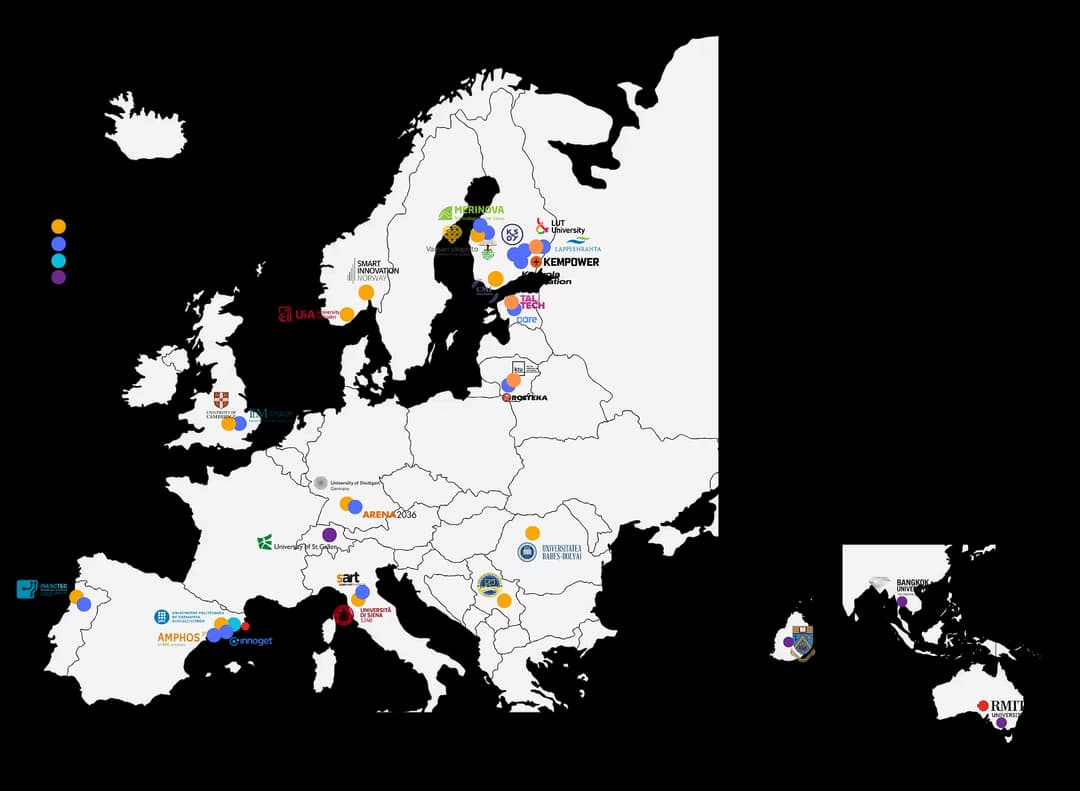
The SMAR3TS Horizon project adopts an Open Innovation approach to undertake cutting-edge research on resilience/restoration/regeneration practices.
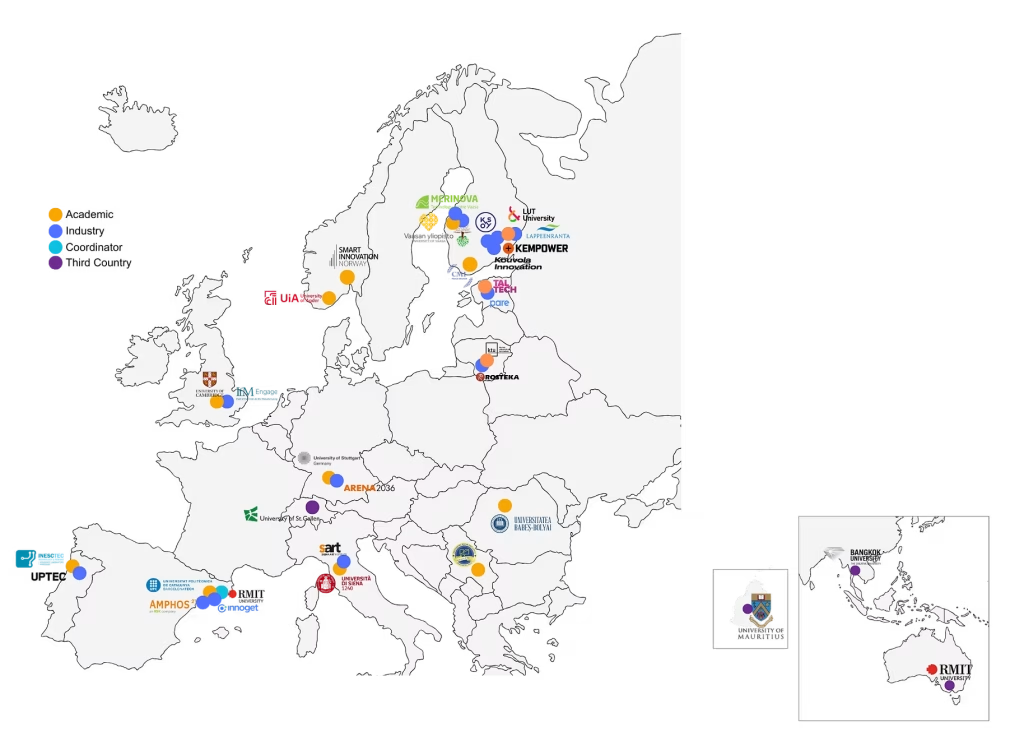
SMAR3TS (Staff Mobility to Action Resilient, Restorative, & Regenerative Transitions & Societies) is promoted by a European and extra-European consortium of 35 partners across 16 countries and 4 continents, including the Siena Art Institute. It will facilitate 360 staff secondment (mobility) months aimed at developing new intersectoral research.
The interconnections between nutrition, mobility, energy, and housing are at the core of the SMAR3TS Horizon project, as changes in one area have significant ripple effects across others.
SMAR3TS Horizon project – Nutrition
Food systems are fundamental to societies and economies yet simultaneously play a significant role in the depletion of biodiversity, and exacerbation of climate change. Extreme weather disrupts food production, storage, and transport, making healthy diets harder to access and afford. At the same time, current food practices are damaging the environment, accelerating climate change, deforestation, and biodiversity loss. Growing global food shortages are making the existing crises worse as well as raising the risk of conflict. The SMAR3TS Horizon project will focus on reshaping food systems to meet the challenges of climate change and rising global demands.
SMAR3TS Horizon project – Mobility
Transport accounts for 25% of global CO₂ emissions and is a major source of air pollution. While technology is advancing quickly, it alone won’t solve the problem. We also need policy-driven behavioural shifts, system-wide innovation, and smarter urban planning—like the 15-minute city model, where daily needs are met locally.
SMAR3TS Horizon project – Energy
Global energy demand is expected to rise by 30% by 2040. To meet this challenge, we need energy systems that are clean, secure, affordable, and sustainable. This work package supports a just transition to green energy by promoting innovation, policy change, and workforce development.
SMAR3TS Horizon project – Housing
Buildings are responsible for around 30% of global energy emissions, driven by construction, heating, cooling, lighting, and appliances. Achieving net-zero buildings is a major challenge—but also a chance to accelerate clean energy adoption and shift behaviours. The project aims at helping to shape immediate improvements around stronger structures, tech, and smarter incentives for sustainable choices. By sharing knowledge and raising awareness on saving money, cutting emissions, and making climate-conscious decisions, we unlock new thinking and drive real change.
The SMAR3TS Horizon project is led by (Chief Investigator and Academic Lead) Professor Anne-Laure Mention, Director, Global Business Innovation Enabling Impact Platform, RMIT University, Melbourne, Australia, administratively coordinated by RMIT Europe and Implemented by an award-winning Team spanning Europe and Australia (Kerry O’Connor and Elia Vallejos Formatge).
Read more about the Siena Art Institute’s projects on the Projects and Visions page.

SMAR3TS is funded by the European Union under the Horizon Europe Marie Skłodowska-Curie Staff Exchange Program (Project ID: 101236376).
Views and opinions expressed are however those of the author(s) only and do not necessarily reflect those of the European Union or the European Research Executive Agency. Neither the European Union nor the European Research Executive Agency can be held responsible for them.