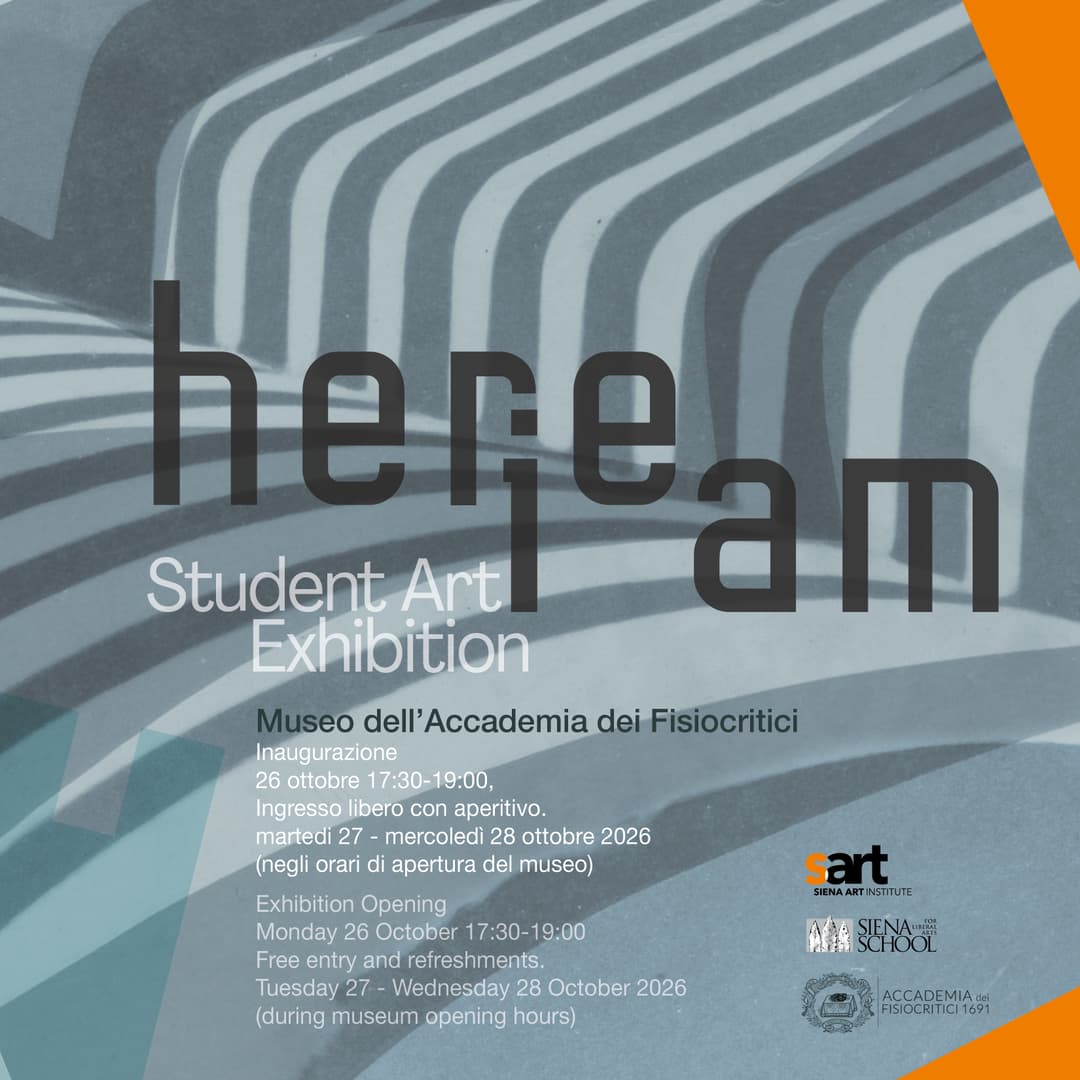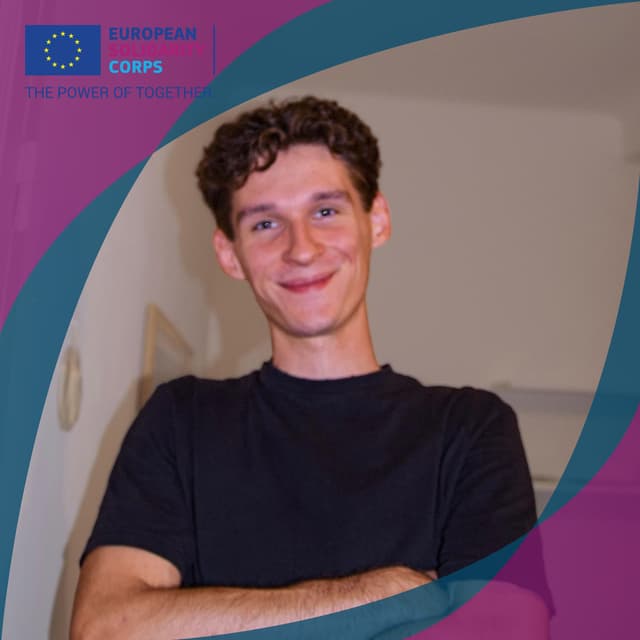
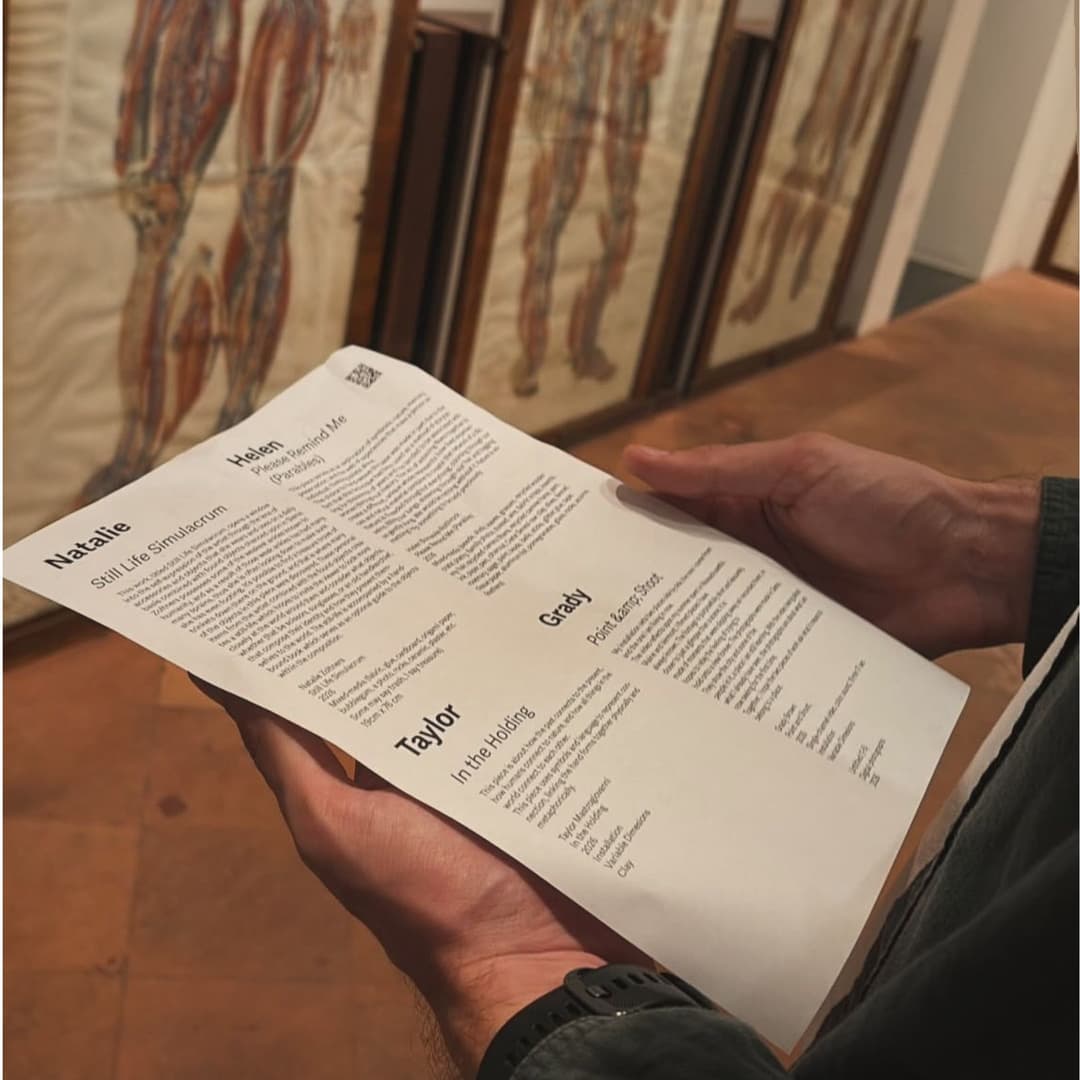
As part of the Here i am Exhibition, we invited our Museum Studies student (Rowan Thomas Francis O'Connor) to take part in the curatorial process, contribuiting to the development of the exhibition texts.
In the following conversation, we explore his experience of working alongside contemporary artists, engaging with the Museo dei Fisiocritici and reflecting on the role of museums and curatorial practice.
What cultural and methodological differences have you encountered both in Museum Studies and in curating this particular exhibition?
First and foremost the fact that I am working alongside the artists as they’re producing their works for the exhibition was the biggest methodological change for this particular exhibition. This radically changes a lot of the elements that I've engaged with in prior situations where the art is somewhat removed from its creator. On another note, everything was much more organizationally and administratively relaxed which was, well let’s just say, quite unusual for me personally. I’m much more used to a stricter schedule and more solid expectations.
As a student of Museum Studies, what aspects did you have to consider when examining the museums in Siena? Specifically, the Museo dei Fisiocritici?
To speak to this question in a slightly broader sense, I think the single most important aspect of analyzing any museum is remembering that the museum is an active participant in its display. It can not be restated enough that every single aspect of the museum is thought through, planned out, and put into practice by an institution that has a very real set of material, social, and ideological goals. Museums are builders of narrative, every choice they make is a conscious, and oftentimes, very charged choice. Within Siena this is no different, indeed within the Museo dei Fisiocritici it is especially relevant. Natural history museums encompass some of the most relevant aspects of modern life, that being global life! Question always what is presented as natural, unnatural, beautiful and ugly. How the earth and its creatures are talked about, how humans are related to them, these are pressing matters that the natural history museum becomes a natural theater for debate on, one ought to interrogate the museum on its answers to these questions.
In what ways and to what extent was the Museo dei Fisiocritici involved in the process of creating/producing the works?
Overall I would say the extent of the Museo Dei Fisiocritici's influence and involvement varied from artist to artist. This exhibition is engaging with a diverse group of people, each working in a radically different medium. In my opinion The Museo Dei Fisiocritici certainly served as a springboard for some of the artists, the noticeable focus on the natural world, collecting, and exhibition in some of the pieces certainly speak to that.
During this project, you had the opportunity to engage with contemporary artists, including the professors and the students themselves (as young artists). What was it like to work alongside these artists?
Firstly, in answering this question I’d like to note that the vast volume of the work on this project was done by the artists. This entire exhibition is built around centering their art and their creative visions. My compatriots were given the reins and readily took hold of them. That having been established I’d say the most interesting, engaging, and ultimately fruitful aspect of working with these artists was being able to talk with them about their works as they were being made. So often curation is seen as the work of organizing dead things, or rather curation is seen as the transformation of living things into dead things. So this approach of engaging with the artworks as living things, still being built and growing throughout the process of organization was, in my opinion, very refreshing and a good reminder that curation needn’t be calcification.
Do you think that participating in the project was a meaningful experience in relation to your studies?
Somewhat, I think this project has certainly improved my ability to work in a very loosely structured environment. This project was a lot more free form than I’m used to. This was, on one hand, due to broader organizational and administrative decisions, and on the other, due to the fact the artworks were still actively being made and worked on right up to the date of exhibition. This experience certainly shook up the normal professional framework I’m used to which, one could argue, is a useful thing.
In what ways and to what extent has this opportunity contributed to your professional and academic growth and development?
I think the most useful aspect of this entire endeavor was experience working alongside artists. In my prior experiences and opportunities I’ve not really had a chance to engage with the people making the works that would be displayed. Working alongside the artists completely changed the flow and expectations of the project, which as mentioned above was quite personally valuable to me.
Has comparing the European context with the American one expanded your knowledge and skills? Has it sparked new interests in you?
I don’t know if I’d say “sparked new interests” rather I’d say comparing the two has reinforced many of my prior interests. In the most general sense the problems that are plaguing America (a rising tide of fascism, a government actively funding and abetting a genocide, governmental repression and police brutality, complete and total disregard for the climate crisis, rising cost of living, defunding of arts and education, devaluing of cultural and social institutions, to name just a few) are also plaguing Europe. The specifics are of course different but the causes and outcomes remain relatively similar and so too does my devotion to smashing these problems. These issues take root from a global system of inequality and exploitation, one that is woven throughout the fabrics of both America and Europe which has finally come back to strangle its homeland. Examining and comparing the two contexts has only reinforced this conclusion and reaffirmed my belief that we, as residents of America or Europe, must rip these evils out by their roots or see ourselves consumed entirely by them.